Best Lemon Bars with Shortbread Crust | Classic Bright Dessert Recipe
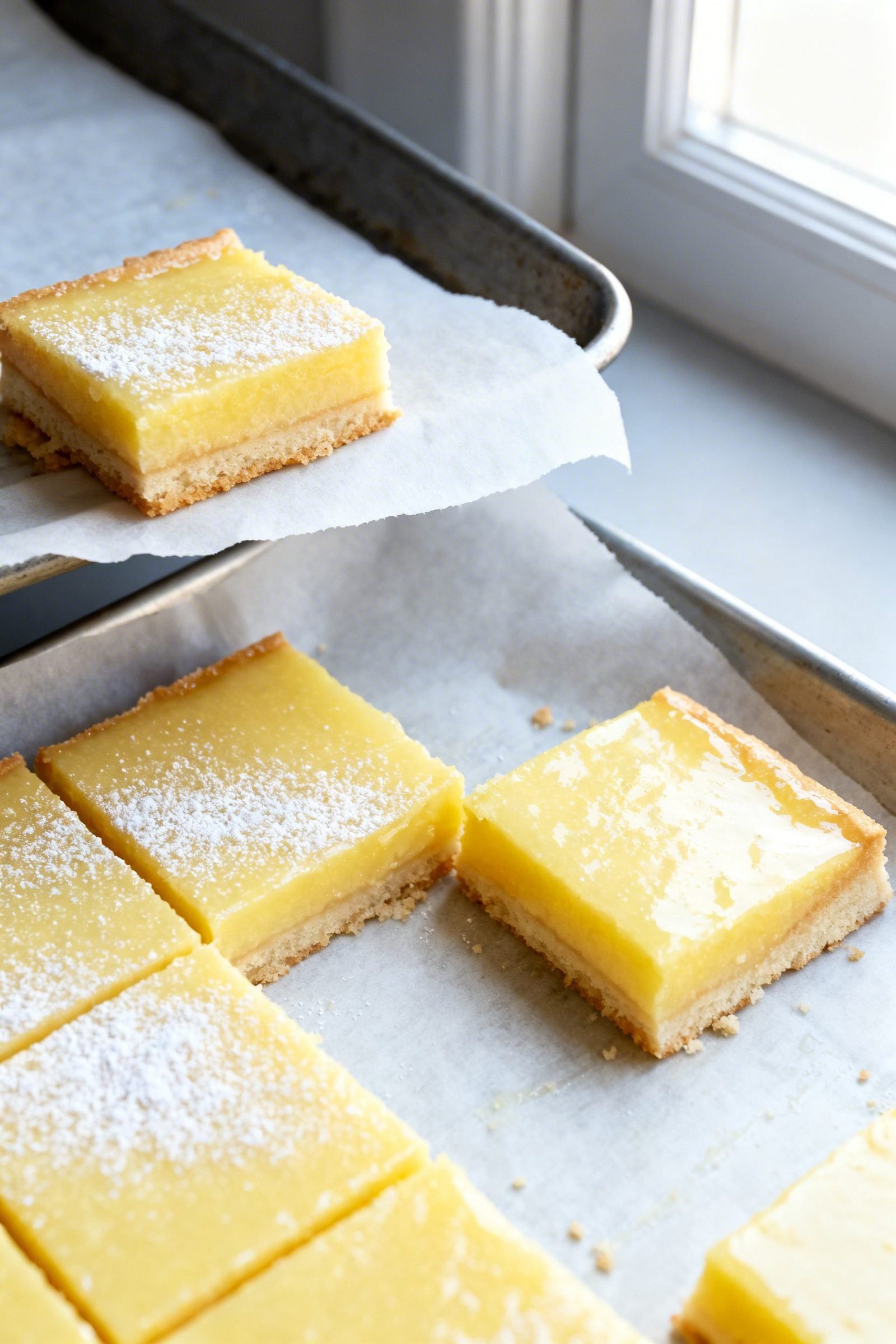
These lemon bars deliver everything you crave: a buttery shortbread crust that melts in your mouth and a bright, tangy lemon filling that sets into perfect, sunshiny squares. The texture hits that ideal sweet spot—silky, not rubbery—with a clean citrus snap in every bite.
They come together with simple pantry staples and a few fresh lemons. I’ll walk you through the steps, share pro tips to get neat slices and a custard that doesn’t weep, and offer variations so you can tweak the tartness and sweetness to your taste.
Why These Lemon Bars Turn Out So Good
- Balanced flavors: Bold lemon brightness meets a lightly sweet, buttery crust so nothing tastes cloying.
- Foolproof crust method: Press-in shortbread means no rolling, no chilling disks of dough, and no stress.
- Silky, stable filling: The right lemon-to-egg ratio gives a custard that sets cleanly and slices neatly.
- Make-ahead friendly: They taste even better after chilling, so you can bake ahead for parties or potlucks.
- Reliable texture cues: Clear visual signs in the recipe help you avoid overbaking or runny centers.
Ingredients
For the Shortbread Crust
- All-purpose flour: Forms a tender, sturdy base that supports the custard.
- Granulated sugar: Light sweetness and subtle crisp edges.
- Fine sea salt: Balances sweetness and boosts buttery flavor.
- Unsalted butter, melted: Easy to mix and gives that classic shortbread snap.
- Vanilla extract (optional): Adds warmth and rounds out the lemon.
For the Lemon Filling
- Fresh lemon juice: Use freshly squeezed for the brightest flavor.
- Lemon zest: Intensifies citrus notes without extra liquid.
- Granulated sugar: Sweetens and helps the filling set glossy.
- All-purpose flour: Gently thickens the custard without heaviness.
- Large eggs: Provide structure and that luscious, custardy texture.
- Fine sea salt: Keeps the lemon flavor sharp and clean.
- Confectioners’ sugar (for dusting): Pretty finish and a sweet contrast to the tart filling.
How to Make These Lemon Bars Step by Step
1) Prep the Pan and Oven
- Heat the oven to 350°F (175°C).
- Line an 8-inch square metal pan with parchment, leaving overhang on two sides for easy lifting. Lightly grease the other sides.
2) Mix and Bake the Shortbread
- Whisk 1 cup plus 2 tablespoons flour, 1/4 cup sugar, and a pinch of salt in a bowl.
- Stir in 1/2 cup melted unsalted butter and 1/2 teaspoon vanilla until a soft dough forms.
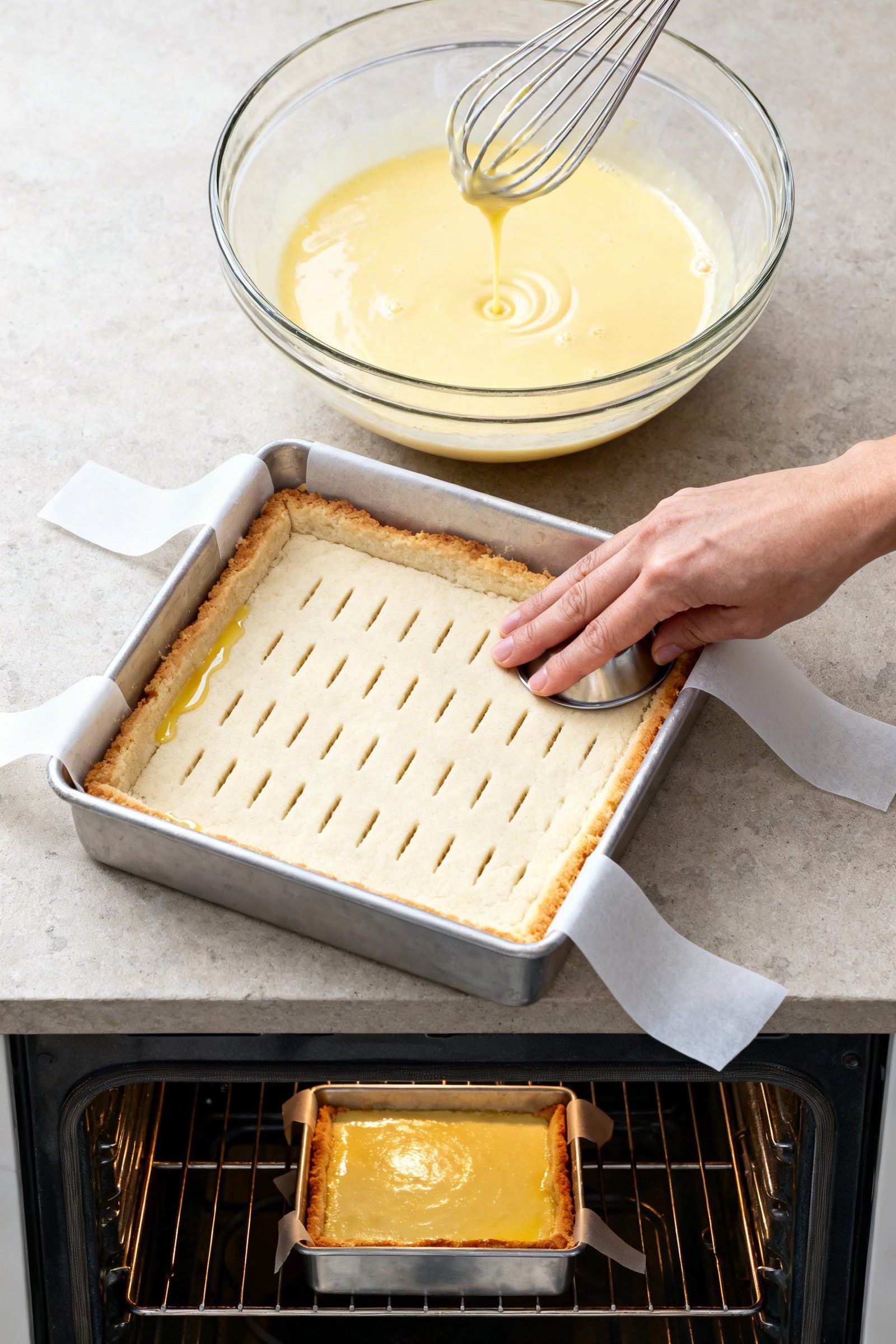
- Press the dough evenly into the prepared pan. Dock the crust with a fork a few times to prevent puffing.
- Bake 16–18 minutes until the edges look lightly golden. Leave the oven on.
3) Whisk the Lemon Filling
- In a bowl, whisk 3/4 cup granulated sugar, 2 tablespoons flour, and a pinch of salt until no flour clumps remain.
- Add 3 large eggs and whisk until smooth, about 20–30 seconds. Don’t overwhip; you want minimal foam.
- Whisk in 1/2 cup fresh lemon juice and 1 tablespoon finely grated zest until fully combined.
4) Bake Until Just Set
- Pour the filling over the hot crust. Work quickly so the custard starts setting evenly.
- Bake 16–20 minutes. Look for set edges and a slightly jiggly center that looks glossy, not wet.
- Remove and cool in the pan on a rack until room temperature, then chill at least 2 hours.
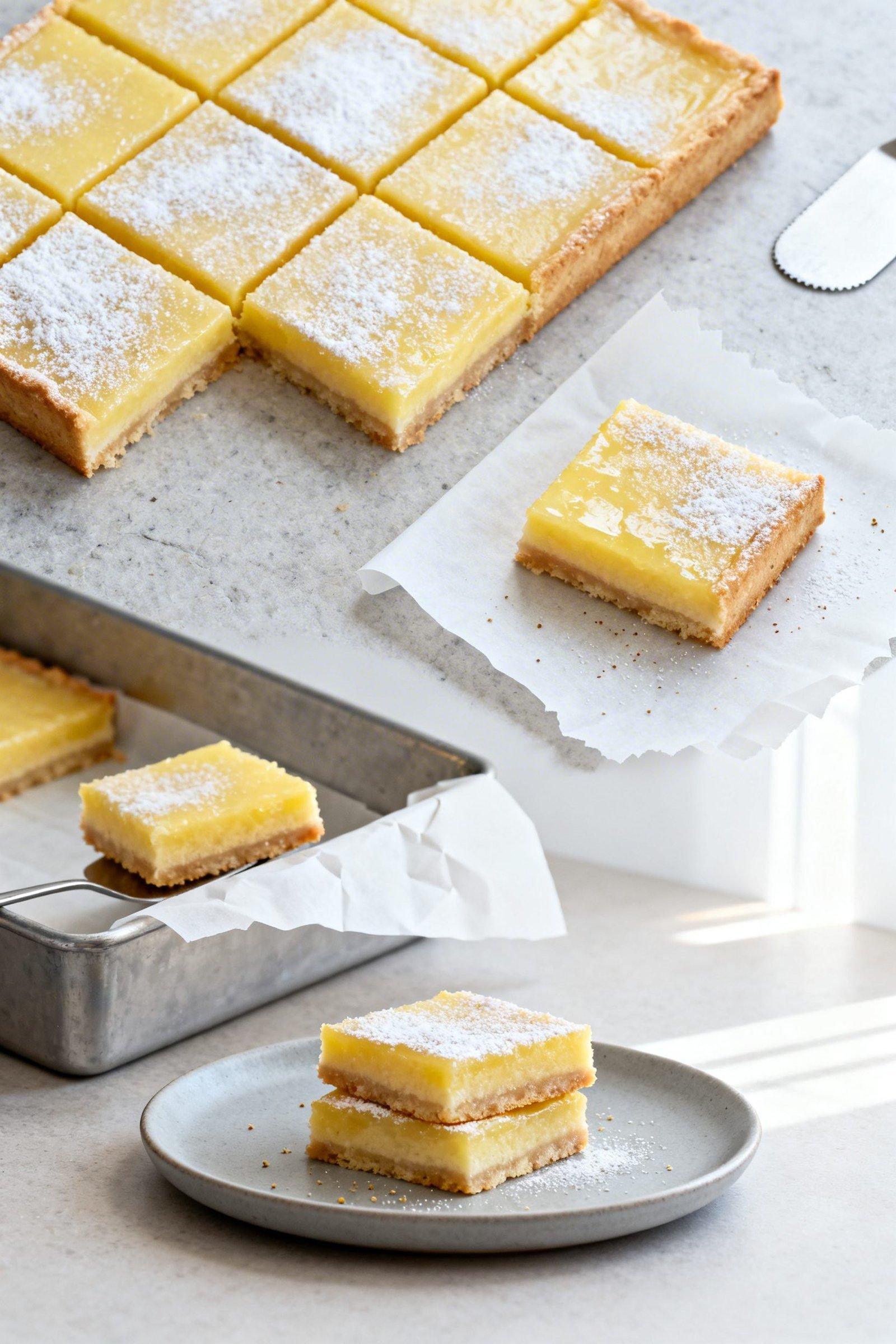
5) Slice and Finish
- Lift the slab out with the parchment. Use a long, sharp knife.
- Wipe the blade between cuts for clean edges.
- Dust with confectioners’ sugar right before serving.
How to Store These Lemon Bars
- Chill for best texture: Store covered in the fridge for 4–5 days. The flavor deepens by day two.
- Freeze for later: Freeze bars (undusted) on a sheet until firm, then wrap individually and store up to 2 months. Thaw in the fridge.
- Add sugar last minute: Dust with confectioners’ sugar right before serving to avoid absorption.
- Avoid condensation: If storing covered, lay a paper towel in the container to catch moisture.
Why You’ll Love Making Lemon Bars at Home
- Simple ingredients, big payoff: Just lemons, eggs, sugar, flour, and butter create bakery-level results.
- Customizable tartness: You control how puckery or sweet you want it.
- No special tools: A whisk, a bowl, and a square pan get the job done.
- Great for sharing: They travel well and plate beautifully for brunches and bake sales.
- Reliable texture: Clear cues help you nail the set every time.
What to Avoid for Perfect Results
- Don’t overbake the filling: Overbaking causes a rubbery texture and a brown top. Pull them when the center still has a soft jiggle.
- Don’t skip lining the pan: Parchment prevents sticking and protects the delicate crust.
- Don’t pour filling into a cooled crust: The hot crust helps the custard set evenly and prevents seepage.
- Don’t overwhip the eggs: Too much air creates bubbles and a foamy top. Whisk only until smooth.
- Don’t slice warm: Let the bars chill so the custard firms and the cuts stay clean.
Fun Variations to Try
- Extra-tart version: Use 2/3 cup sugar in the filling for more pucker, and increase zest to 1.5 tablespoons.
- Meyer lemon bars: Swap in Meyer lemons for a sweeter, floral citrus note; reduce sugar by 1–2 tablespoons if you like.
- Almond shortbread crust: Replace 1/4 cup flour with fine almond flour and add 1/4 teaspoon almond extract.
- Coconut finish: Sprinkle 1/3 cup toasted coconut over the dusted bars for texture and tropical aroma.
- Lemon-lavender: Infuse 1 tablespoon honey with 1/2 teaspoon culinary lavender, strain, and whisk honey into the filling.
- Gluten-free swap: Use a quality 1:1 gluten-free flour blend for both crust and filling thickener.
FAQ
How do I know when the lemon bars are done?
Look for set edges and a soft wobble in the center. The surface should look glossy and no longer liquid. If the top browns, they went too long.
Can I double the recipe?
Yes. Use a 9×13-inch pan, increase the baking time slightly, and check early. The same visual cues apply.
Why did my filling separate or get a white film?
Overbaking can cause a thin eggy layer on top. Bake just until set. If you see bubbles, you whisked too much air—next time whisk more gently.
Can I reduce the sugar?
Within reason. You can cut the filling sugar by 2–3 tablespoons. Sugar helps the custard set and balances acidity, so avoid bigger cuts.
Do I need to blind-bake the crust longer?
No. A light golden edge is enough. It finishes baking once you add the filling.
How do I get clean slices?
Chill completely, lift with parchment, and use a hot knife: dip in warm water, wipe, slice, and repeat. Wipe after every cut for sharp edges.
Can I use bottled lemon juice?
Fresh juice delivers brighter flavor and better aroma. Bottled can taste flat. If you must, choose a high-quality not-from-concentrate brand and keep the zest generous.
What if my bars taste eggy?
They likely overbaked. Next time, pull them earlier and use the jiggle test. Also make sure you include enough zest for vivid lemon flavor.
Wrapping It Up
With a buttery shortbread base and a vivid, silky lemon layer, these bars strike that perfect sweet-tart balance every time. Follow the simple cues—hot crust, gentle whisking, and a just-set bake—and you’ll get bright, clean slices that wow at any gathering. Bake them today, chill them overnight, and serve tomorrow for the best flavor and texture. They never last long on the plate.
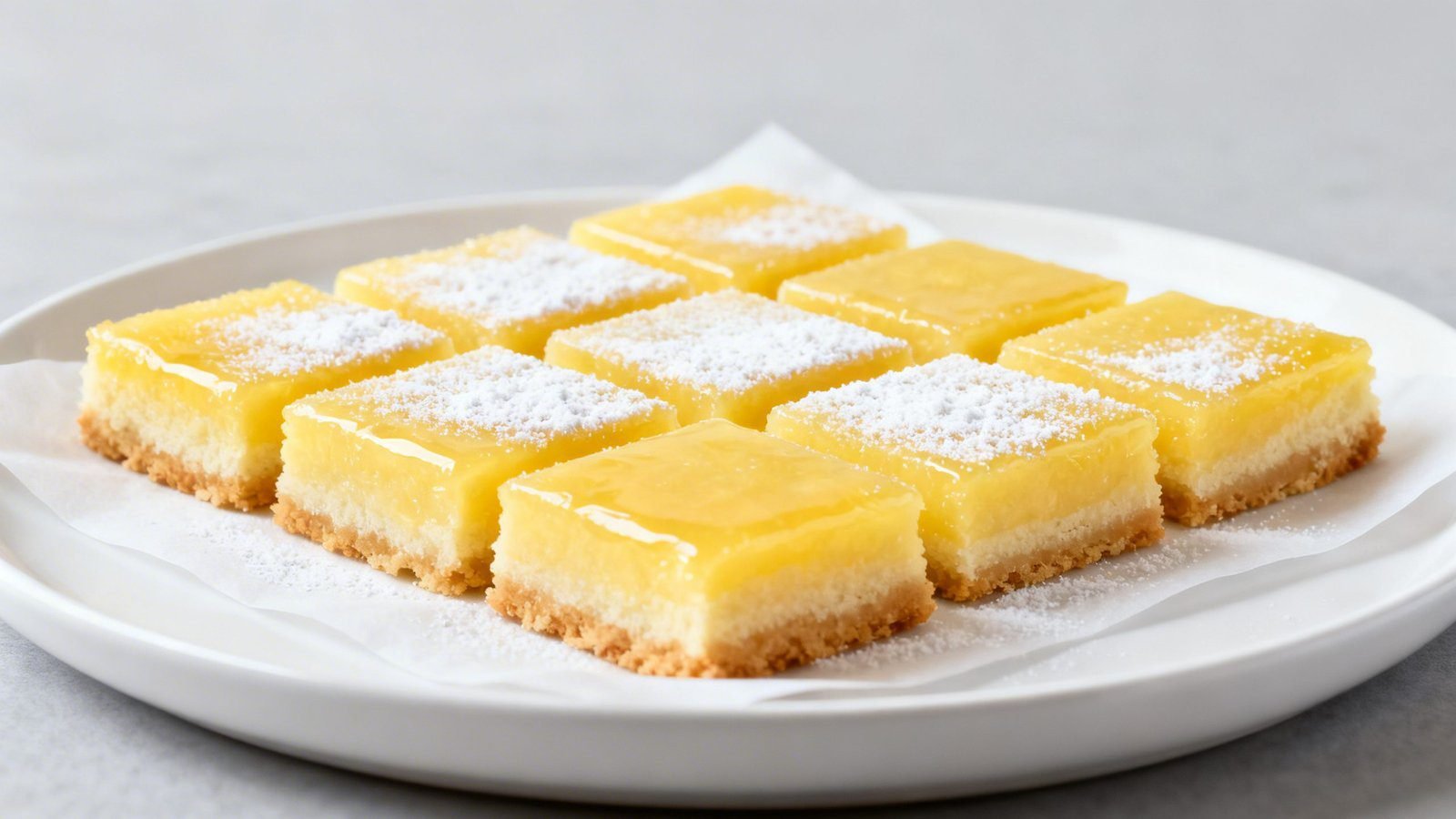
Best Lemon Bars with Shortbread Crust
Buttery press-in shortbread topped with a bright, silky lemon custard that bakes to clean, sunshiny squares.
Ingredients
- For the Shortbread Crust:
- 1 cup plus 2 tablespoons all-purpose flour
- ¼ cup granulated sugar
- Pinch fine sea salt
- ½ cup unsalted butter, melted
- ½ teaspoon vanilla extract (optional)
- For the Lemon Filling:
- ¾ cup granulated sugar
- 2 tablespoons all-purpose flour
- Pinch fine sea salt
- 3 large eggs
- ½ cup fresh lemon juice
- 1 tablespoon finely grated lemon zest
- Confectioners’ sugar, for dusting
Instructions
- Heat oven to 350°F (175°C). Line an 8-inch square metal pan with parchment, leaving overhang on two sides; lightly grease the remaining sides.
- Make the crust: In a bowl, whisk 1 cup plus 2 tablespoons flour, ¼ cup sugar, and a pinch of salt. Stir in ½ cup melted unsalted butter and ½ teaspoon vanilla until a soft dough forms.
- Press dough evenly into the prepared pan and dock with a fork a few times. Bake 16–18 minutes until edges are lightly golden. Leave the oven on.
- Make the filling: In a bowl, whisk ¾ cup sugar, 2 tablespoons flour, and a pinch of salt until no clumps remain. Add 3 large eggs and whisk until smooth, about 20–30 seconds (do not overwhip). Whisk in ½ cup fresh lemon juice and 1 tablespoon finely grated zest until combined.
- Pour the filling over the hot crust and work quickly so it starts setting evenly.
- Bake 16–20 minutes until edges are set and the center is slightly jiggly and glossy, not wet.
- Cool in the pan on a rack to room temperature, then chill at least 2 hours.
- Lift out using parchment. Slice with a long sharp knife, wiping the blade between cuts. Dust with confectioners’ sugar just before serving.